Long Distance Birthday Ideas That Still Feel Close
Long distance birthdays feel quieter, but they can still feel meaningful. Thoughtful gestures, small surprises, and shared moments can make the distance feel smaller.


Long distance birthdays feel quieter, but they can still feel meaningful. Thoughtful gestures, small surprises, and shared moments can make the distance feel smaller.

Breakups often feel isolating and deeply personal. But many endings follow quiet emotional patterns. A reflective post on heartbreak, absence, and healing.

Why the silence after a call can feel heavier in long distance relationships. A quiet reflection on distance, overthinking, and long distance relationship anxiety.

Not every breakup ends in a way that makes grief easy to explain. Sometimes life keeps moving, but something in you is still carrying it.

People say breaking up by text is always low character, but the truth is messier than that. Sometimes the method is not the real issue at all.

Trust issues are common in long distance relationships. Learn why distance makes trust harder and how to build emotional security across miles.

Sometimes cheating doesn’t start with proof — it starts with a feeling. When something shifts and you can’t explain it, suspicion quietly begins.

A reflective post about why the urge to text an ex feels so strong after a breakup, and why it is often more about comfort, habit, and loneliness than love.
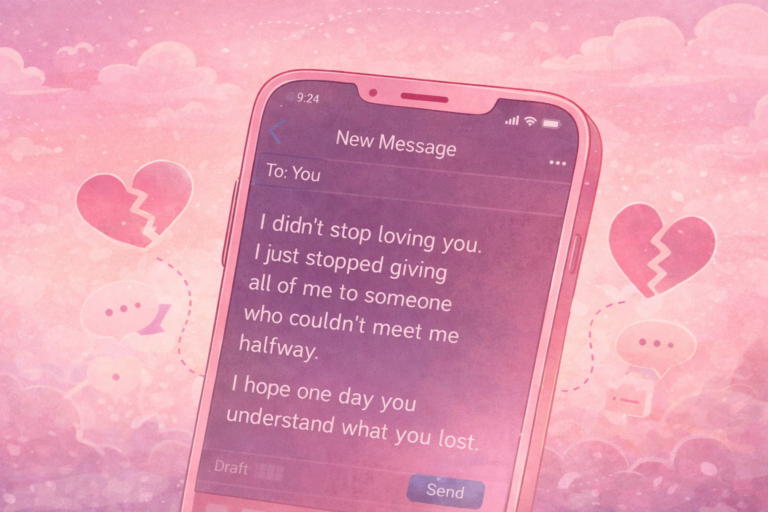
Some breakups end, but the words stay. This reflective post explores unsent messages, unfinished conversations, and the quiet truth people carry after heartbreak.

Long-distance relationships rarely fall apart all at once. Sometimes the biggest shift is when you quietly start wondering if the effort is still worth it.