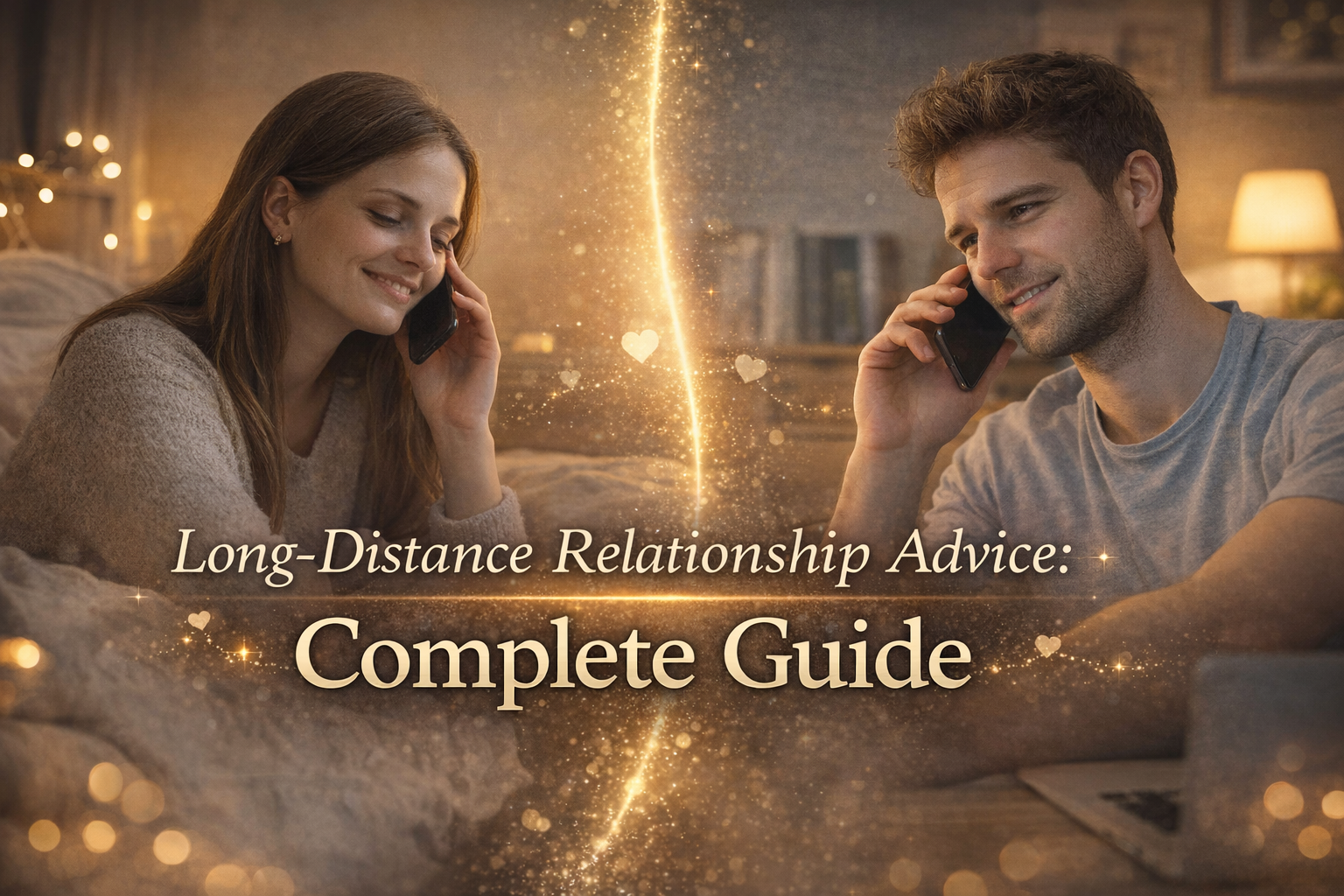
Long-distance relationships change the way love is lived day to day.
You don’t get the casual closeness that other couples often take for granted.
No quick coffee together.
No dropping by after work.
No easy hug after a difficult day.
Instead, long-distance love is built through intention.
It’s built through messages sent at odd hours, calls squeezed into busy schedules, and the quiet decision to keep showing up for each other even when life would make it easier not to.
That’s part of what makes long-distance relationships so meaningful — but also so difficult.
Why Long-Distance Relationships Feel So Intense
Distance has a way of magnifying everything.
Small misunderstandings can feel bigger.
Silence can feel heavier.
A delayed reply can mean far more than it should.
At the same time, small moments of care can feel incredibly powerful. A thoughtful message, a voice note, a planned visit, or a tiny reminder that someone is thinking of you can carry real emotional weight.
When you can’t rely on physical presence, emotional consistency matters even more.
What Long-Distance Couples Often Struggle With
Most long-distance couples don’t struggle because they care too little.
They struggle because distance puts pressure on the connection in very specific ways.
- communication starts feeling repetitive
- one person begins carrying more of the effort
- busy schedules make the relationship feel neglected
- trust becomes harder to maintain
- future plans start feeling unclear
Over time, these things can create frustration, insecurity, and emotional fatigue — even in relationships that still have real love in them.
What Actually Helps
The strongest long-distance relationships usually have a few things in common.
They make space for honest communication.
They talk openly about expectations.
They find ways to stay emotionally present in ordinary life, not just during dramatic moments.
That doesn’t mean they get everything right. It just means they keep returning to the relationship with intention.
Sometimes that looks like planning calls more deliberately. Sometimes it means talking honestly about resentment before it builds. Sometimes it means admitting that the distance itself is becoming harder than expected.
When You Need More Than Generic Advice
One of the hardest things about long-distance relationships is that the problems are rarely as simple as “just communicate more.”
Maybe your boyfriend has become too busy.
Maybe your girlfriend feels more distant lately.
Maybe you’re always the one reaching out.
Maybe you’re starting to wonder whether the relationship is still working the way it used to.
If you’re dealing with those kinds of questions, it helps to read advice that is actually specific to what long-distance couples go through. This long-distance relationship advice hub pulls together guidance on communication, trust, emotional disconnection, gifts, conflict, and future planning in a much more grounded way.
The Truth About Distance
Distance does not automatically ruin a relationship.
But it does reveal things.
It reveals how each person handles uncertainty.
It reveals whether effort is mutual.
It reveals whether the relationship has enough emotional depth to survive the parts that are inconvenient, lonely, and unromantic.
That can be painful, but it can also be clarifying.
A More Honest Way to Look at It
Not every long-distance relationship is meant to last forever.
But many do survive — and even become stronger — because both people learn how to love each other more intentionally.
They stop relying only on proximity.
They learn how to reassure each other clearly.
They learn how to build closeness without always being in the same room.
That kind of love asks for more, but it can also create something deeper.
Final Thought
If you’re in a long-distance relationship right now, it’s okay if it feels hard.
It doesn’t mean you’re doing it wrong.
It doesn’t mean the connection is doomed.
It just means distance asks different things from love.
And sometimes the best thing you can do is stop guessing, stop spiraling, and start looking at the real patterns in front of you.
Because when long-distance relationships work, they usually don’t work by accident.
They work because two people keep choosing each other with clarity, effort, and patience — even across the miles.