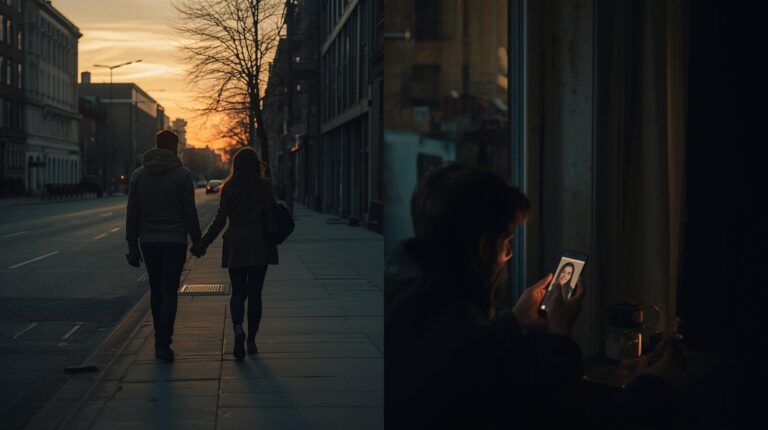

Distance has a strange effect on time.
Some days feel slow. Other days disappear quickly. And sometimes, both happen at once.
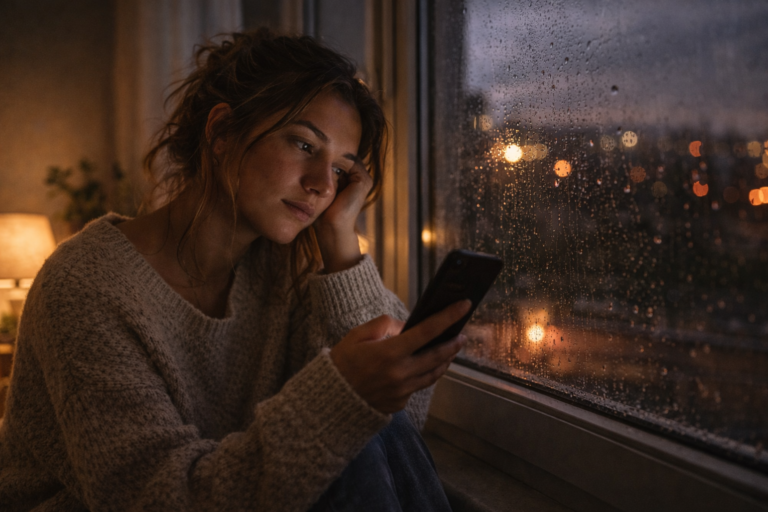
When you’re waiting to talk to someone, time can drag. You check the clock. You distract yourself. You tell yourself you’re not waiting… even though you probably are.
And then when you finally talk, time suddenly moves too fast.
An hour feels like ten minutes. The conversation ends sooner than you’d like. And you’re back to waiting again.
Distance creates that kind of rhythm.
Waiting.
Talking.
Waiting again.
This is similar to waiting more than living. When distance becomes part of the relationship, time often starts revolving around conversations.
You might find yourself thinking in small countdowns.
Later tonight.
Tomorrow morning.
This weekend.
Nothing dramatic. Just quiet markers in your day.
And yes, sometimes you probably try not to think about it too much.
(That rarely works.)
This is also why distance can make moments feel more intense. Because they’re limited, they carry more meaning. You notice them more. You remember them longer.
This is something explored in why waiting feels harder long distance. Distance changes not just the connection, but how time around the connection is experienced.
Over time, you might also notice how quickly weeks pass.
You measure time differently. Not by days, but by conversations. Not by routines, but by moments together.
And sometimes, that can feel both comforting and frustrating.
Comforting because you’re still connected.
Frustrating because you wish those moments lasted longer.
Distance doesn’t just change how you connect.
It changes how time feels while you’re doing it.
And yes… sometimes that means an hour feels too short, and a day feels too long.
(Which is probably the most accurate description of long distance there is.)