Distance has a funny way of turning your phone into something you notice a lot more.
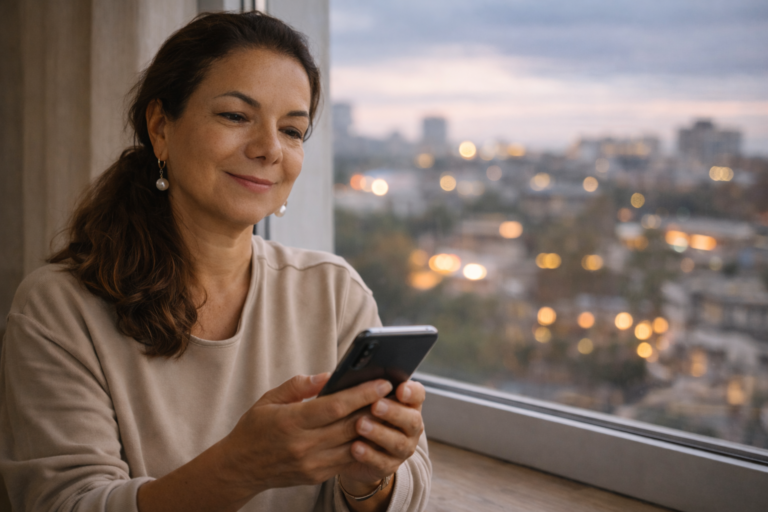
You tell yourself you’re not waiting.
You’re just checking the time. Or reading something. Or… checking again for no particular reason.
And then you realise you’ve picked up your phone five times in ten minutes.
Distance does that.
When you’re close to someone, communication happens naturally. You see each other. You talk without planning. You don’t rely on your phone to feel connected.
When you’re apart, your phone becomes the connection.
So naturally, you start noticing it more.
You notice when a message comes in.
You notice when it doesn’t.
You notice when it’s later than usual.
And even if you try not to, part of your brain is quietly paying attention.
This is similar to waiting more than living. When distance becomes part of the relationship, waiting sometimes becomes part of the routine too.
It doesn’t mean you’re needy. It doesn’t mean something is wrong.
It just means the way you stay connected has changed.
And when connection depends on messages, your attention naturally follows.
Sometimes you don’t even realise you’re doing it. You just feel slightly distracted. Slightly aware. Like you’re expecting something without fully admitting it.
Then your phone lights up.
And suddenly everything feels fine again.
Distance can create that kind of quiet rhythm.
Waiting.
Message.
Relief.
It’s not dramatic. It’s subtle. But it’s there.
This is also why overthinking can creep in more easily. When there’s more space between conversations, your mind sometimes fills the gaps. And if we’re being honest, your mind is rarely calm about it.
This is something explored in why overthinking gets worse in long-distance relationships. Distance doesn’t just create space physically — it creates space mentally too.
And sometimes that mental space leads to checking your phone again.
Just in case.
Distance doesn’t mean the connection is weaker.
It just changes how you experience it.
And sometimes, that means checking your phone more than you’d like to admit.
(We’ve all done it. Probably today.)